Find Marking Equipment by Production Level
Whether you mark a few boxes per week or run a continuous packaging line, the right coding method should fit the way your products move through production. Start with your workflow, then consider the material, the information being printed, and the frequency of code changes.
Occasional Manual Marking
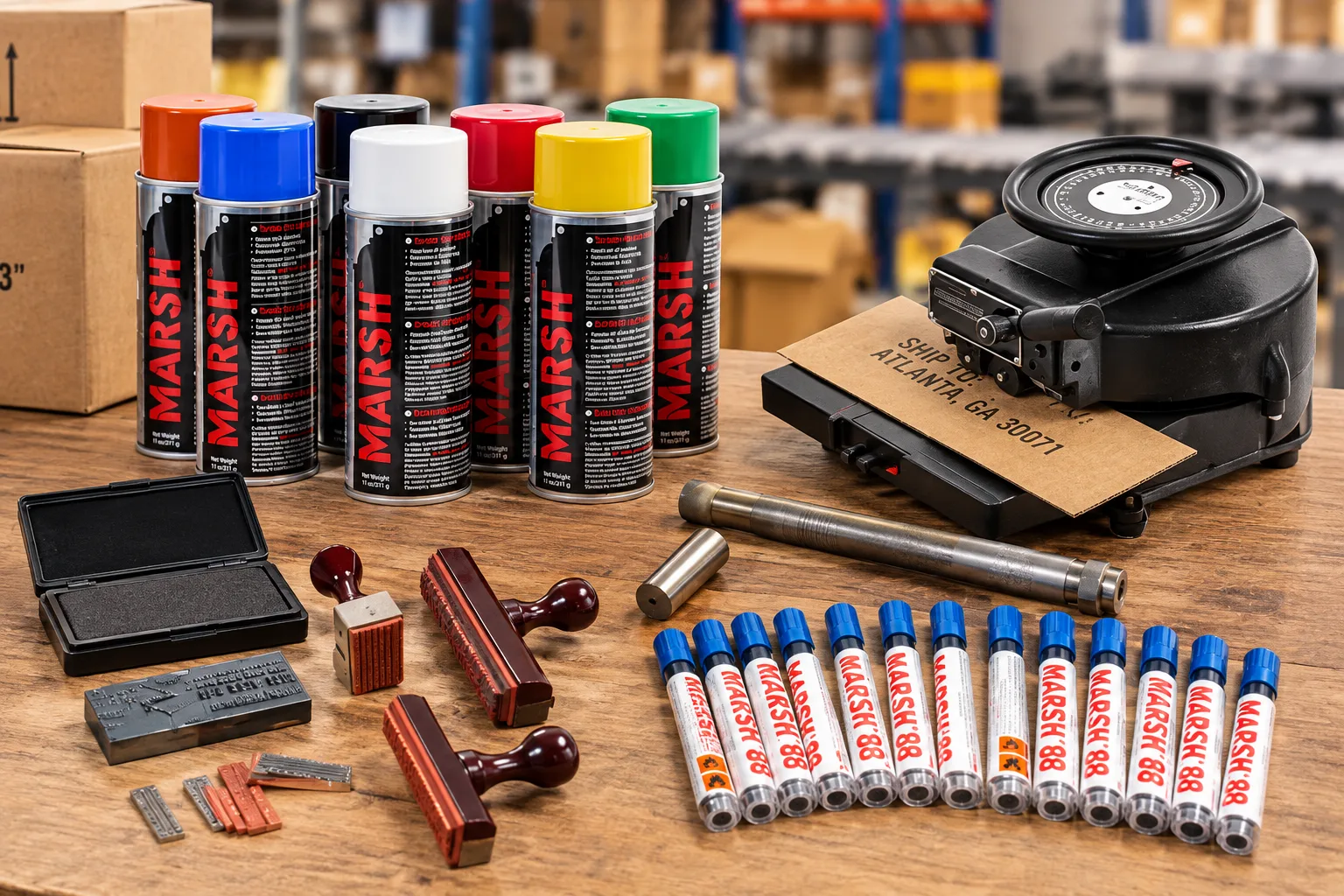
For occasional shipping marks, inspection identifiers, batch numbers or other straightforward messages, manually applied marking tools often provide the simplest starting point. They require little setup and can be used away from a production line.
Equipment to consider
- Industrial paint and ink markers for writing directly on products or packaging
- Hand stamps with interchangeable rubber type for repeatable messages
- Stencils and marking ink for larger shipping or identification marks
Considerations: Manual methods depend on the operator for placement and consistency. The ink must be suitable for the surface and handling conditions.
Explore marking equipment at Pro Pack Solutions →Repetitive Manual Marking
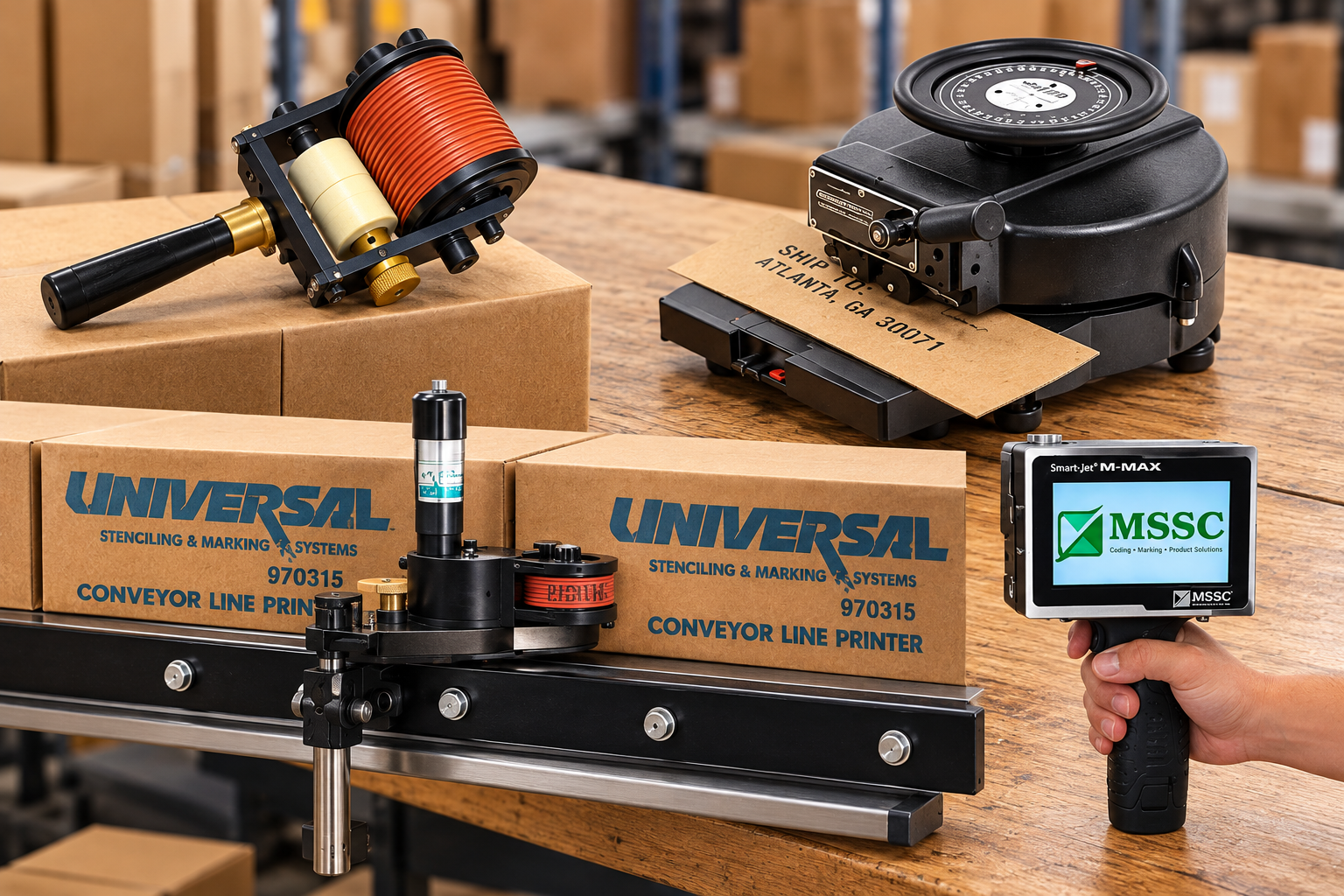
When the same type of code is applied repeatedly but products are still handled individually, a hand-operated roller coder, stamp system or handheld inkjet printer may improve consistency and reduce repetitive writing.
Equipment to consider
- Handheld roller coders for repeated text or identification marks
- RIBtype-style changeable type systems for dates, lots and short messages
- Handheld inkjet printers when codes change frequently or more flexible text is needed
Considerations: Check print area, substrate, code-change frequency and operator handling. Handheld inkjet printing also requires attention to ink selection, print distance and maintenance.
Small-Batch and Semi-Automatic Coding
For short production runs, products may pass through a tabletop workstation, simple fixture or intermittent conveyor. The objective is to apply the code reliably without adding more automation than the operation needs.
Equipment to consider
- Contact coders positioned for repeatable carton or package marking
- Inkjet printheads integrated with a small conveyor or packaging machine
- Manual or semi-automatic fixtures that hold products at a consistent marking position
Considerations: Product spacing, orientation, surface shape and changeover time can matter more than the total number of products marked per day.
Conveyor-Integrated Coding
When packages move through a production line, coding can occur without stopping each item for manual marking. Both mechanical contact coders and noncontact inkjet systems have roles here.
Equipment to consider
- Conveyor-mounted contact coders for suitable repetitive carton markings
- Thermal inkjet systems for dates, lot numbers, product identifiers and other variable information
- Large-character coding equipment for outer cases and shipping cartons
For example, the Universal Mini-Coder is a contact coding option for porous materials such as corrugated cartons and paper. Actual suitability depends on the application and installation.
Considerations: Confirm conveyor speed, product detection, printhead mounting, print location, ink drying and whether the code must change automatically between products.
High-Volume Automated Production
Higher-throughput lines may require automated data handling, consistent code placement, integration with upstream equipment and minimal downtime. The appropriate system depends on the line rather than volume alone.
Requirements to evaluate
- Line speed, duty cycle and available marking window
- Substrate and ink adhesion, especially on glass, metal, plastic and coated packaging
- Required print height, resolution, barcodes or serialized information
- Integration with sensors, encoders, controllers and production data
- Consumable costs, cleaning, maintenance and service access
Considerations: Some applications call for specialized technologies beyond the equipment shown on this site. Selection should follow a review of the actual line and sample marking tests.
Quick Comparison
| Workflow | Methods to evaluate | Main decision factor |
|---|---|---|
| Occasional | Markers, stamps, stencils | Ease of use and material compatibility |
| Repetitive manual | Roller coders, changeable type, handheld inkjet | Operator effort and code changes |
| Small batch | Contact coding, fixtures, small inkjet installations | Repeatability and changeover |
| Conveyor-integrated | Mounted contact coders, thermal inkjet, case coding | Speed, placement and substrate |
| High volume | Application-specific integrated systems | Throughput, data and reliability |
These categories describe common workflows, not fixed price tiers or guaranteed equipment capabilities.
Need Help Narrowing the Options?
Before choosing equipment, identify the material you need to mark, your approximate production rate, the size and content of the code, and whether products move past a fixed marking station. If possible, provide a sample of the surface to be marked.
Next, explore materials and applications or marking technologies.
Contact Pro Pack Solutions →